Category: Special Education Advocacy
-
Electronic Spell Checkers in an IEP: Accommodation Examples for Dyslexia
Short answer: An electronic spell checker can be written into an IEP or 504 Plan when a student’s disability makes spelling a barrier to showing knowledge, completing written work, or participating in the curriculum. The plan should name when the tool is allowed, what features the student needs, who will teach the student to use…
-
IEP Reading Goals: Measurable Examples for Dyslexia and Struggling Readers
A strong IEP reading goal names the exact skill, starting point, materials or conditions, target performance, measurement method, and deadline. “Will improve reading” is not measurable. “Given a controlled word list containing taught one- and two-syllable patterns, the student will read 45 of 50 words accurately across three consecutive weekly probes by the annual review…
-
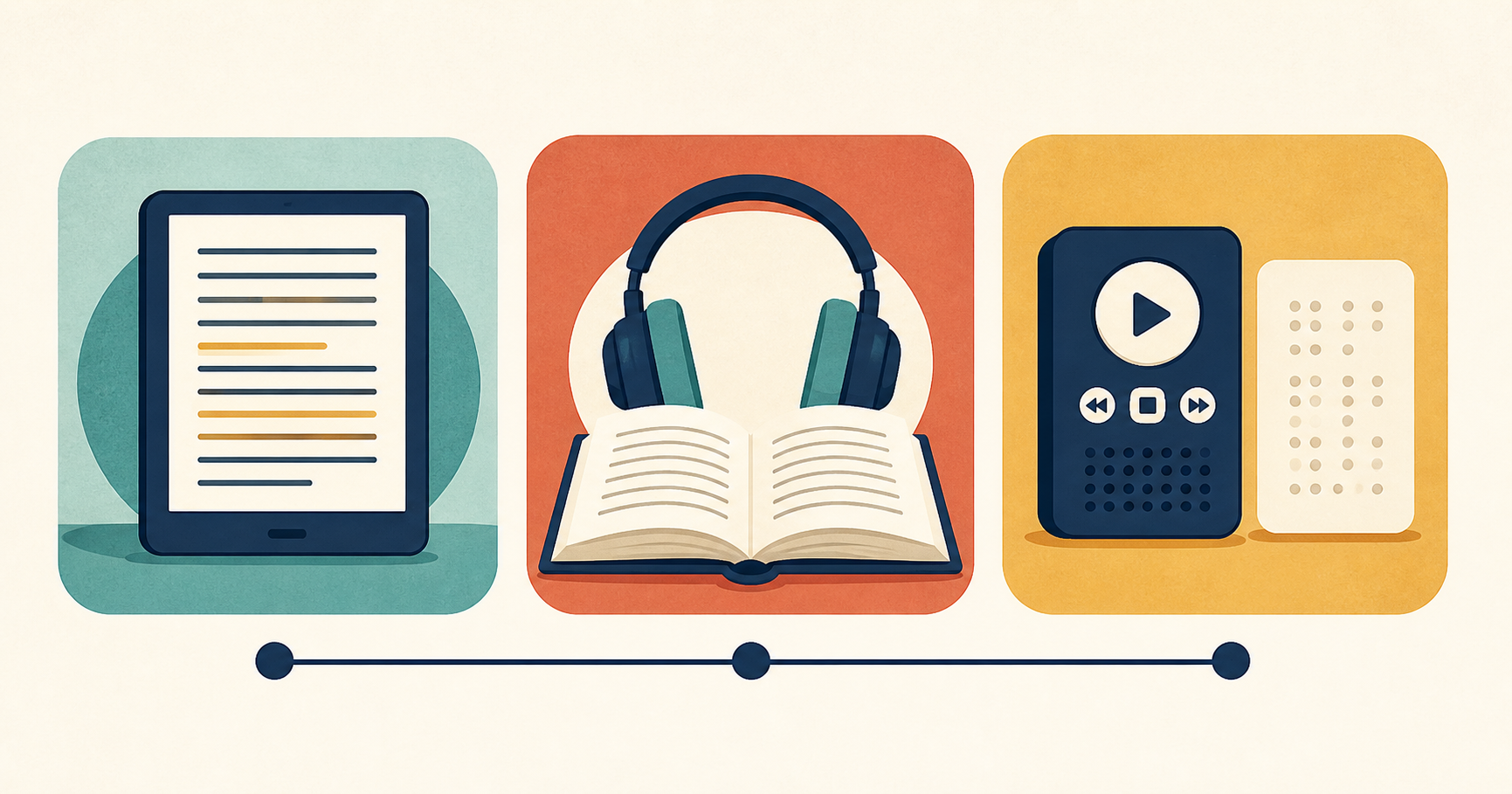
Bookshare vs. Learning Ally vs. NLS/BARD: Which Accessible Book Service Fits Your Child?
Short answer: Bookshare is usually the best first stop for a very large, customizable accessible-ebook library; Learning Ally is especially useful when a child benefits from human narration paired with highlighted text and school-focused titles; and NLS/BARD is a free national library service with human-narrated audio, electronic braille, and specialized reading equipment. Many eligible children…
-
Dyslexia May Qualify Your Child for Free Accessible Books. Here’s What Schools Rarely Explain.
Last weekend I was doing what a lot of us do. Comparison shopping audiobook gadgets for my kid. Yoto versus Toniebox, ad-free Kindles, locked-down old iPhones, the whole rabbit hole. I had tabs open. I had opinions about tabs. Somewhere in that spiral I stumbled onto a word I had never seen in nine months…
-
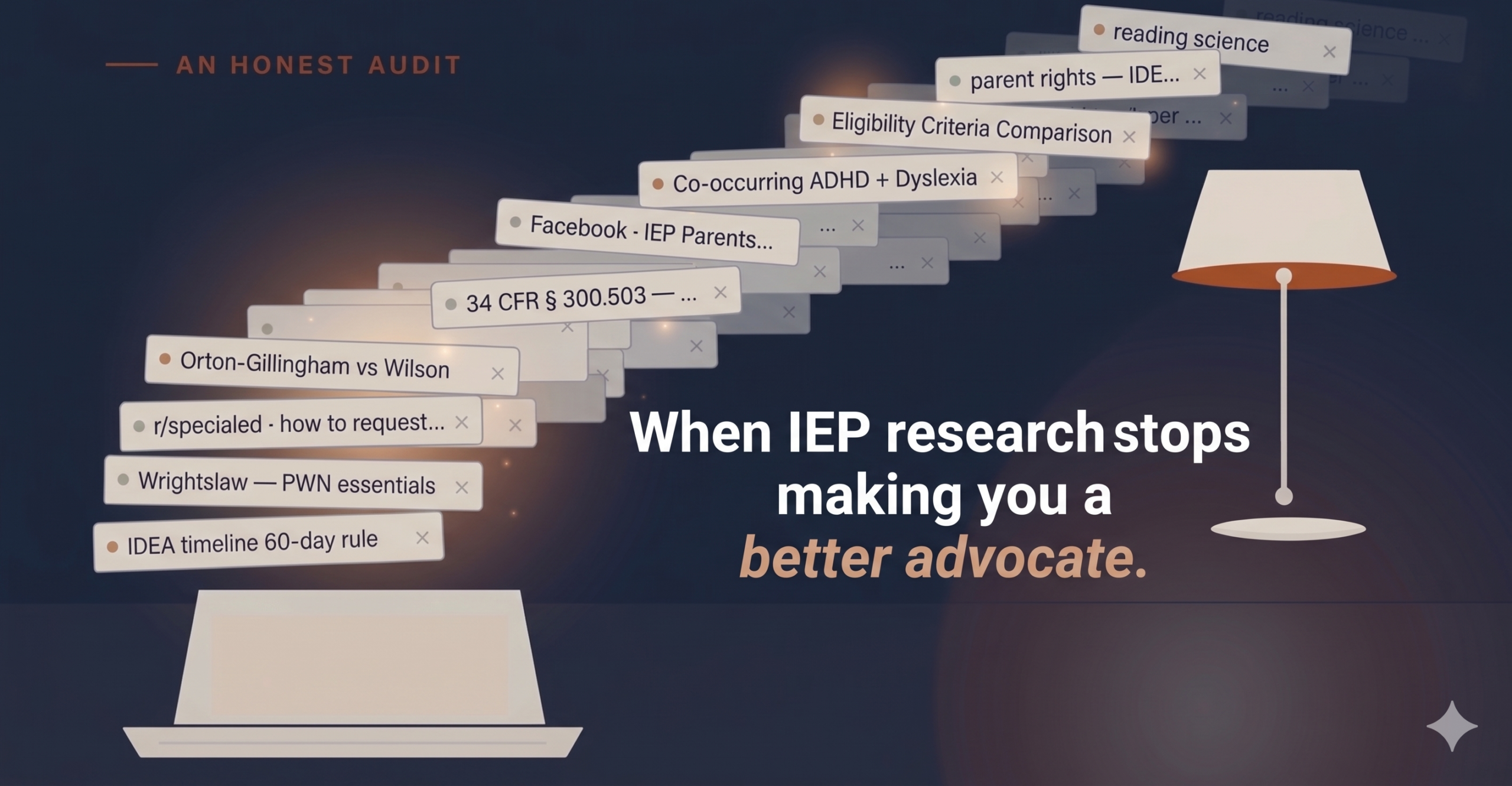
When IEP Research Stops Making You a Better Advocate (An Honest Audit)
I think a lot of us are doing this and pretending it’s the same thing as advocacy. There is a real, important difference between research that makes you a better advocate for your child and research that just makes you feel a little less terrified for the next forty-five minutes.
-

Practice the IEP Meeting Before You Walk In (Free AI Prompt for Parents)
Here is the thing nobody tells you about IEP meetings. You will walk in prepared. You will have your folder. You will have rehearsed what you want to say in the shower for three weeks. And then someone will smile warmly across the table and say “We’re really pleased with how she’s responding,” and you…
-

504 vs IEP: Which Does My Child Need?
504 plans and IEPs sound similar but are very different legal tools. Here’s how to tell which one your child actually needs, what each one provides, and what to do when the school pushes one over the other.
-

How to Read Your Child’s Special Education Evaluation (Without Getting Talked Past)
Every single standard score on a special education evaluation has measurement error baked into it. If you get a report with a score of 81, the 81 isn’t a single fixed point. It’s the middle of a range. Depending on the test and the subtest, the actual ability the score is trying to capture could…
-

The Special Education Paper Trail Schools Don’t Volunteer (And How to Find It)
The first time I sat through an IEP meeting where I felt completely outmatched, I left the room thinking the same thing every parent has thought at some point. “I have no idea if any of what they just said is actually true.” The school had a process. They referenced their process. They said things…
-
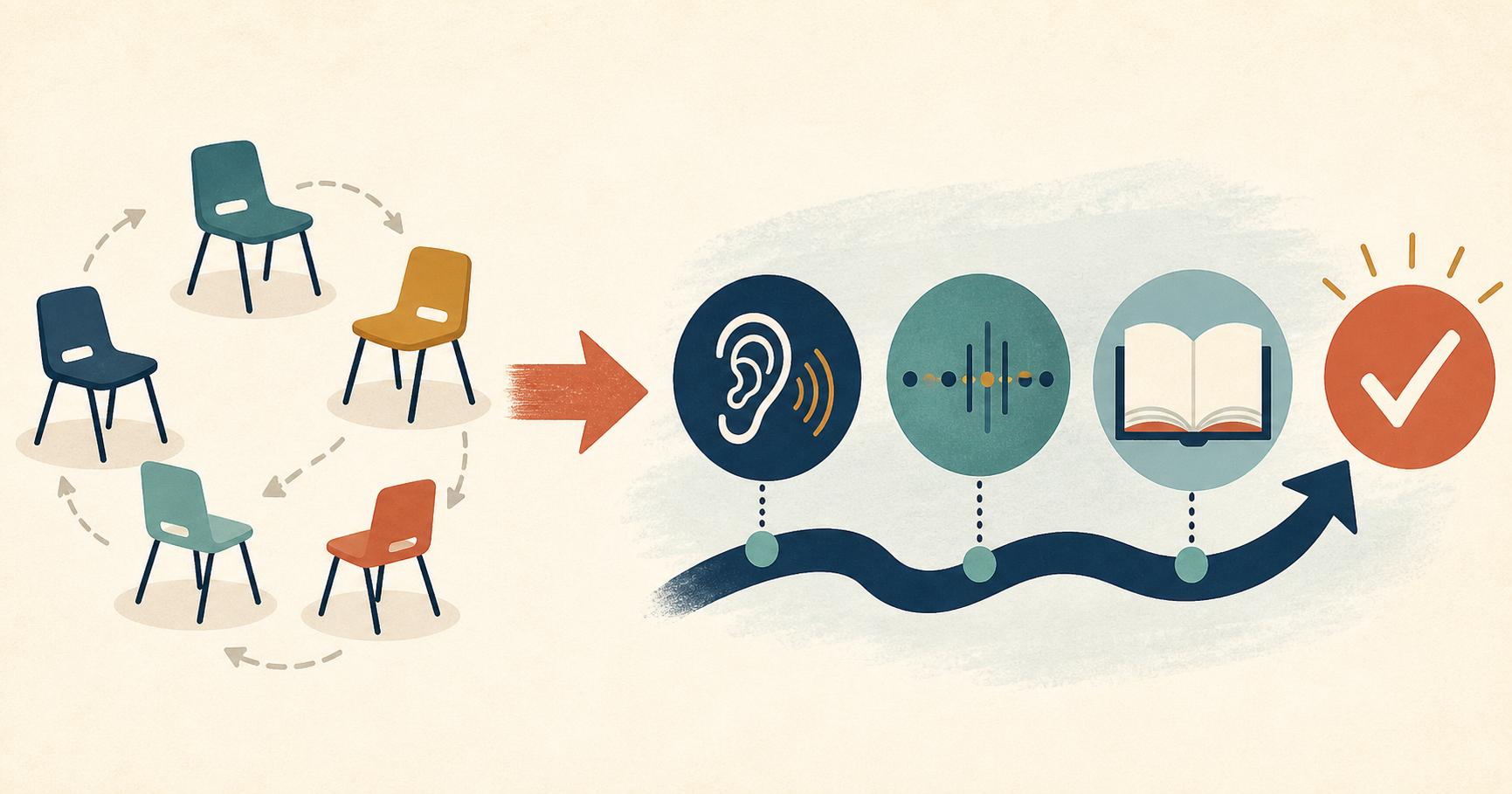
Stop Debating Where Your Child Sits. Start Asking How They’re Being Taught.
If you have a child with an IEP, you have probably sat in a meeting and felt the full weight of this question: where should my child be taught? The inclusion debate has consumed special education for decades. Parents fight for general education classrooms. Schools push back. Other families pull their kids into self-contained settings…